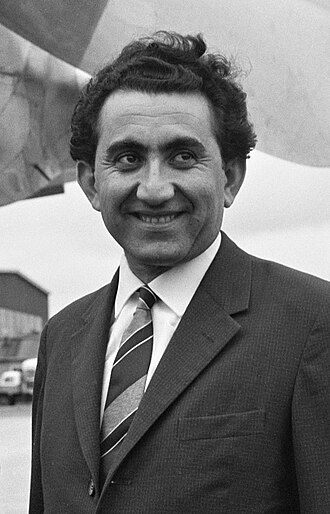
World Champion 1963–1969
Tigran Petrosian
Soviet Union · 1929–1984
Tigran Petrosian, known as "Iron Tigran," was World Champion from 1963 to 1969 and the supreme defensive and prophylactic player, renowned for neutralizing threats before they ever arose.
Career highlights
- World Champion 1963–1969
- Greatest prophylactic and defensive player in history
- Exceptionally difficult to defeat in his prime
Early Life
Tigran Petrosian was born in Tbilisi, Georgia, in 1929 to Armenian parents. Orphaned during the Second World War, he survived years of hardship, sweeping streets to get by while teaching himself chess from the books of Aron Nimzowitsch. Those works, with their emphasis on prophylaxis and control, shaped the unique style he would carry for the rest of his career.
Rise to the Top
Petrosian became a grandmaster in the early 1950s and spent a decade as one of the world’s most difficult opponents to beat. Patient and almost impossible to dislodge, he won the 1962 Candidates tournament to earn his shot at the title.
World Champion
Defeating Botvinnik
In 1963 Petrosian defeated Mikhail Botvinnik to become the ninth World Champion. Because the rematch clause had been abolished, his victory was final — Botvinnik chose not to continue.
The 1966 defense
Petrosian then did something no champion had managed in decades: he successfully defended the title in a match, turning back the rising Boris Spassky in 1966. Spassky returned stronger, however, and took the crown in their 1969 rematch.
Playing Style
Petrosian was the supreme exponent of prophylaxis — the art of foreseeing and preventing the opponent’s plans before advancing his own. His games could appear quiet, even bloodless, but beneath the surface lay an iron control that made him perhaps the hardest player ever to defeat. His positional exchange sacrifices, giving up a rook for a minor piece to dominate the board, became a signature.
Legacy
“Iron Tigran” remained a leading player long after losing the title, winning multiple Soviet Championships and proving a pillar of the dominant Soviet Olympiad teams. He died in 1984. Once underrated for his cautious style, he is now recognized as one of the deepest defensive and strategic minds the game has produced.
Portrait via Wikimedia Commons.