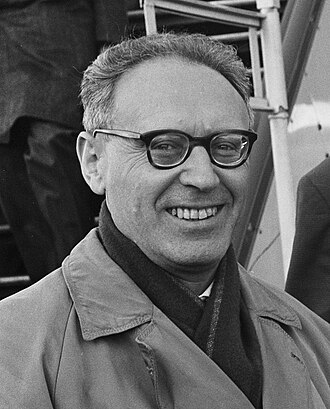
World Champion 1948–1957, 1958–1960, 1961–1963
Mikhail Botvinnik
Soviet Union · 1911–1995
Mikhail Botvinnik, the "Patriarch" of the Soviet chess school, dominated the post-war era through rigorous preparation and is remembered as a founder of modern professional chess and an early pioneer of computer chess.
Career highlights
- World Champion 1948–1957, 1958–1960, and 1961–1963
- Founder of the Soviet chess school
- Mentor to Karpov, Kasparov, and Kramnik
Early Life
Mikhail Botvinnik was born near St. Petersburg in 1911. He learned chess relatively late, at twelve, but rose with startling speed, famously defeating Capablanca in a simultaneous exhibition as a teenager. He trained as an electrical engineer and pursued that profession alongside chess for much of his life, bringing a scientist’s discipline to everything he did at the board.
Rise to the Top
Botvinnik became the Soviet Union’s leading player in the 1930s and shared first at the great AVRO tournament of 1938 against the world’s elite. A match with Alekhine was being arranged when the Second World War, and then Alekhine’s death, intervened — leaving the world title vacant.
World Champion
The 1948 tournament
With the championship unclaimed, FIDE organized a five-player tournament in 1948 to decide the succession. Botvinnik won it convincingly, becoming the sixth World Champion and inaugurating decades of Soviet dominance over the game.
A champion who kept coming back
Botvinnik’s reign was defined by his uncanny ability to recover. He lost the title to Vasily Smyslov in 1957 and to Mikhail Tal in 1960, but used the rematch clause then in force to defeat both men and reclaim the crown the following year. He finally lost it for good to Tigran Petrosian in 1963, after which the rematch right was abolished.
Playing Style
Botvinnik was the supreme strategist of preparation. He studied openings deeply, analysed his own games with ruthless objectivity, and even trained his physical fitness for the demands of long matches. His approach turned chess into a science of preparation and made him the model of the modern professional.
Legacy
Beyond his own results, Botvinnik shaped the future of the game through the famous school he ran, whose graduates included three future World Champions — Anatoly Karpov, Garry Kasparov, and Vladimir Kramnik. He was also a pioneer of computer chess, devoting his later years to programming a machine to play like a grandmaster. The “Patriarch” of Soviet chess died in 1995, his influence woven through everything that followed.
Portrait via Wikimedia Commons.