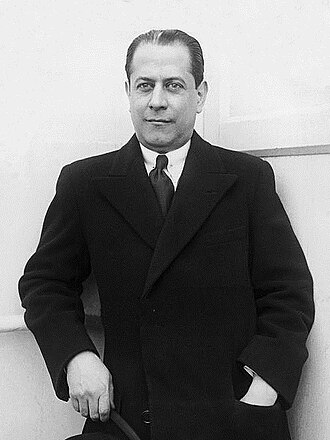
World Champion 1921–1927
José Raúl Capablanca
Cuba · 1888–1942
José Raúl Capablanca, the Cuban prodigy nicknamed the "Chess Machine," was celebrated for an effortless, intuitive style and an endgame technique so precise that he lost only a handful of games in his entire career.
Career highlights
- World Champion 1921–1927
- Lost only around three dozen serious games in his career
- Famous for flawless, intuitive endgame technique
Early Life
José Raúl Capablanca was born in Havana, Cuba, in 1888. By his own famous account, he learned the rules of chess simply by watching his father play and then pointing out an illegal move. The story may be embellished, but the talent behind it was not: at twelve he defeated the Cuban champion Juan Corzo in a match, a prodigy of a kind the chess world had rarely seen.
Rise to the Top
Sent to study in the United States, Capablanca dazzled the chess clubs of New York with a casual brilliance that seemed to require no effort at all. His international breakthrough came at San Sebastián 1911, one of the strongest tournaments ever assembled, which he won at his very first attempt against the established elite.
The wait for a match
A title match with Emanuel Lasker was delayed for years by the First World War and by disputes over money and conditions. When it finally came, Capablanca was at the peak of his powers.
World Champion
In 1921 Capablanca defeated Lasker in Havana without losing a single game, taking the crown he had seemed destined for since boyhood. As champion he was almost untouchable in tournament play, extending an extraordinary unbeaten streak that ran for eight years between 1916 and 1924.
The upset of 1927
His reign ended in one of the game’s great surprises. In 1927 the relentless, meticulously prepared Alexander Alekhine ground him down over a marathon match in Buenos Aires. Capablanca spent the rest of his life seeking a rematch that Alekhine, understandably, never granted.
Playing Style
Capablanca’s chess was the embodiment of clarity and economy. He avoided complications not from weakness but because he could see straight to the heart of a position, simplifying into endgames he handled with a precision that has never been bettered. He made the hardest things look effortless, and his games remain among the finest teaching material ever produced.
Legacy
Nicknamed the “Chess Machine” for his near-flawless play, Capablanca lost only around three dozen serious games in his entire career. He died of a stroke in New York in 1942. Many judges of the game still regard his natural talent as the purest it has ever seen — a player who understood chess as if by instinct.
Portrait via Wikimedia Commons.