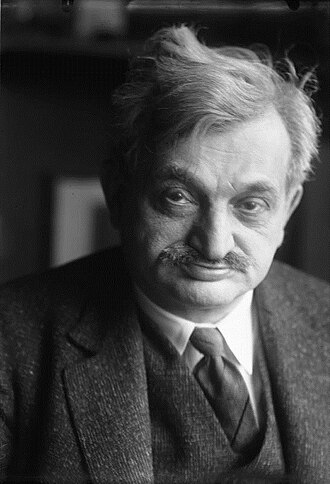
World Champion 1894–1921
Emanuel Lasker
Germany · 1868–1941
Emanuel Lasker held the World Championship for twenty-seven years, the longest reign in the game's history, combining deep psychological insight with formidable fighting resilience.
Career highlights
- World Champion 1894–1921 — the longest reign ever
- Renowned mathematician and philosopher
- Defended the title against Steinitz, Tarrasch, Marshall, Schlechter, and Janowski
Early Life
Emanuel Lasker was born in Berlinchen, Prussia, in 1868, the son of a Jewish cantor. Sent to Berlin to study mathematics, he supported himself partly through chess and revealed a prodigious talent for it. He would remain a serious scholar throughout his life, earning a doctorate in mathematics and corresponding with figures such as Albert Einstein, who later wrote an admiring foreword to his biography.
Rise to the Top
Lasker rose rapidly through the 1890s, winning match after match against established masters. By 1894 he felt ready to challenge the aging Wilhelm Steinitz for the world title — a bold move for a player not yet universally regarded as the strongest in the world.
World Champion
Lasker took the title from Steinitz in 1894 and confirmed his superiority in their 1896–97 rematch. What followed was the longest reign in the history of the championship: twenty-seven years at the summit of the game.
Defending the title
He turned back every challenger of his era — Frank Marshall, Siegbert Tarrasch, Dawid Janowski, and, most dramatically, Carl Schlechter in 1910, a match Lasker escaped only by winning the final game to tie. His dominance in tournaments was equally emphatic, capped by towering victories at St. Petersburg 1914 and New York 1924.
The end of the reign
Lasker finally lost the crown to José Raúl Capablanca in 1921 in Havana, resigning the match without a single win to his name. Even in defeat he remained a force, and the loss did nothing to diminish his standing among the all-time greats.
Playing Style
Lasker was famous for a deeply practical, psychological approach to the board. He did not chase theoretical perfection; instead he played the moves that posed his particular opponent the greatest difficulty, sometimes choosing objectively second-best continuations to drag the game onto unfamiliar ground. His fighting resilience and refusal to lose were decades ahead of his contemporaries.
Later Life and Legacy
The rise of the Nazi regime forced Lasker, by then in his sixties, to flee Germany; he lived in England, the Soviet Union, and finally the United States. Remarkably, he returned to top-level competition and finished third at the great Moscow tournament of 1935, ahead of many of the world’s best. He died in New York in 1941. His blend of psychology, endurance, and sheer competitive will makes him one of the most influential champions the game has known.
Portrait via Wikimedia Commons.