In 1997 a machine beat the World Champion, and chess was supposed to die. Instead it was reborn. Engines did not replace human players — they became the sparring partner, the textbook, and the referee for an entire generation.
The Deep Blue moment
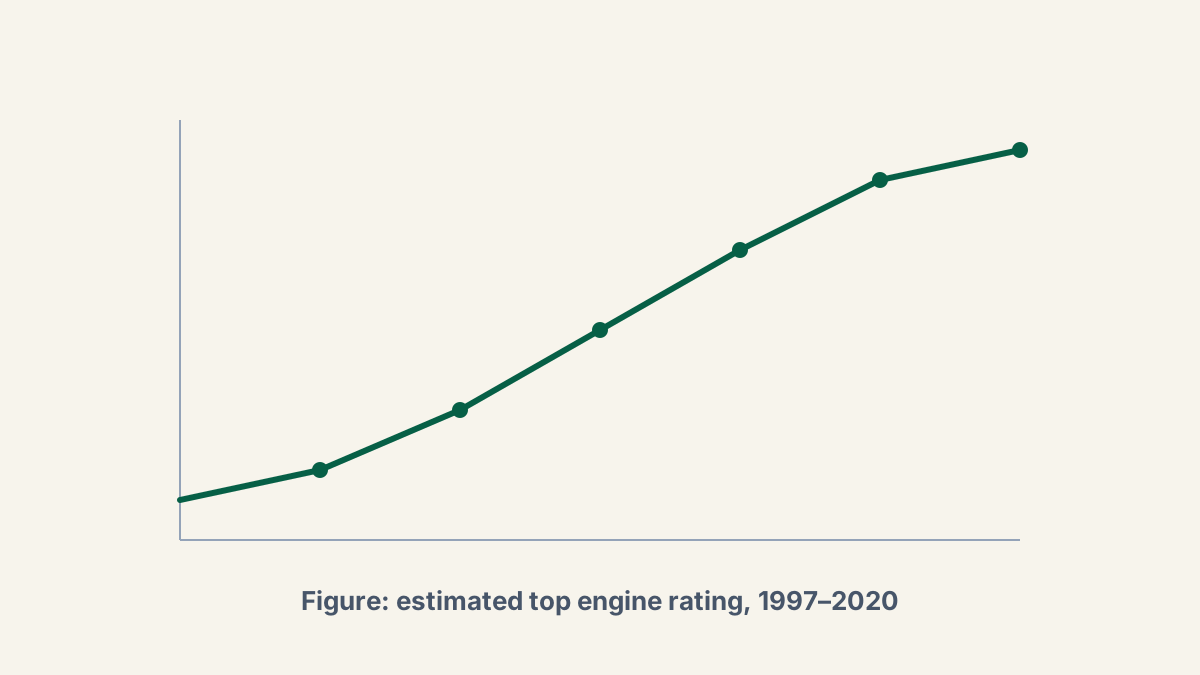
When Deep Blue defeated Garry Kasparov, the result was less important than the shift it signalled. For the first time, brute-force calculation could out-see a human in tactical positions. Within a decade, engines on ordinary laptops were stronger than any grandmaster alive.
From calculators to oracles
Early engines were tactical monsters but positional simpletons. They would grab a pawn and suffer for forty moves. Modern engines, especially neural-network systems, evaluate positions with something that looks unsettlingly like intuition.
AlphaZero taught itself chess in hours and played sacrifices that no human would have trusted — and they worked.
How preparation changed
The biggest practical impact was on opening theory. Lines that were considered unplayable for decades were rehabilitated overnight once an engine showed the defensive resource. Preparation became deeper, sharper, and far less forgiving.
- Novelties are now prepared 25–30 moves deep.
- Players memorise engine lines and the reasons behind them.
- A single overlooked move can lose before the middlegame begins.
The democratisation of analysis
A club player today has access to analysis that the 1990s World Champion could only dream of. The gap between elite preparation and amateur study tools has never been smaller.
What it did to style
Engines rewarded concrete calculation over general principles, and top players adapted. The modern style is more flexible, more willing to accept structural damage for dynamic chances, and far better at defending positions once thought lost.
- Defence improved — players hold positions engines say are tenable.
- Material became more negotiable — long-term compensation is trusted.
- Preparation became a weapon as decisive as over-the-board skill.
The machine did not make chess smaller. It revealed how vast the game still is — and handed everyone the keys to explore it.